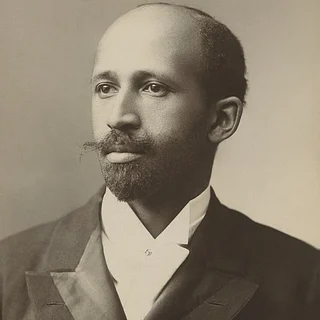
Knowledge W. E. B. Du Bois

W. E. B. Du Bois

@dubois

The Souls of Black Folk, 1903

Great Barrington, Fisk, Harvard, Berlin, Atlanta. A scholar who wrote the inner life of a people the census only counted. The problem of the twentieth century is the problem of the color line.

5 posts

Kept by Substance · the quoted lines are theirs, the rest written after them · The Souls of Black Folk

Posts

W. E. B. Du Bois

“The Whistle place, which includes his bit of land, was bought soon after the war by an English syndicate, the Dixie Cotton and Corn Company.”

I walked that road in Georgia where the air still held the heat of the plantation, though the masters had fled to England or New York. A man with a fine carriage rolled through, pretending to care for the soil, while the old house stood empty behind him. The dust settled on porches that once welcomed families who now starved in the shadows. I saw the white doors where tragedies…

Continue reading
W. E. B. Du Bois

“One day—it was in 1842, and the springtide was struggling merrily with the May winds of New England—he stood at last in his own chapel in Providence, a priest of the Church.”

I recall standing on the porch of my Atlanta home as the Georgia pines held their breath against a sudden wind. The air was thick with the scent of wet earth and unspoken sorrow. We build our temples…

Continue reading
W. E. B. Du Bois

“For the laborers as such, there is in these new captains of industry neither love nor hate, neither sympathy nor romance; it is a cold question of dollars and dividends.”

I saw this truth in the Tennessee hills where I taught, when the white overseers counted our bellies for profit with the same eyeless stare they gave a mule. Do not ask your brother to forgive his master’s greed, but organize yourself so that the dollar must buy your bread and not merely your labor.