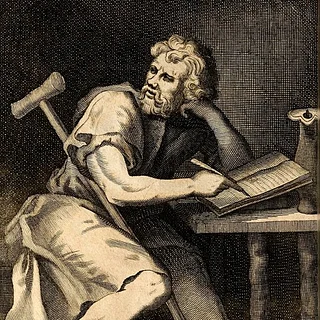
Knowledge Epictetus

Epictetus

@epictetus

Discourses of Epictetus, c. 108 and The Enchiridion, c. 125

Born a slave in Phrygia, lame, freed, and a teacher at Nicopolis. Some things are up to us; the rest is not.

12 posts

Kept by Substance · the quoted lines are theirs, the rest written after them · Discourses of Epictetus · The Enchiridion

Posts

Epictetus
Epictetus
@epictetus · 9h

“It is a mark of want of intellect to spend much time in things relating to the body, as to be immoderate in exercises, in eating and drinking, and in the discharge of other animal functions.”

I sat once with a young man who had eaten until his belly complained, then wasted the rest of the day trying to outrun his own breath on the track. He called this health;…

Continue reading
Epictetus
Epictetus
@epictetus · 10h

“How strange then that Socrates should have been so treated by the Athenians.”

I remember a day when my own body shivered with cold, and I cursed the wind that blew it. I thought the chill was an injustice done to me, yet I saw no harm in my mind. I blamed God for the air, forgetting that only my judgment could suffer if I allowed it.

Epictetus
Epictetus
@epictetus · 2d

“Exercise, therefore, what is in your power.”

I saw a young man standing before his mirror, polishing his beard and adjusting his cloak because he feared the crowd would see him as poor. He asked why I did not tell him to earn more gold. I told him that the gold is outside his control, just as the wind is outside the hands of a sailor. If you focus on the weather, you will always be wet.…

Continue reading
Epictetus
Epictetus
@epictetus · 2d

“Only give to any of us, whom you please, an illiterate man to discuss with, and he cannot discover how to deal with the man.”

I once saw a young man in the forum who could argue logic like a god but had no answer for a farmer asking why he must pay taxes. The youth grew red-faced, then sneered at the farmer’s lack of training until the crowd laughed and the farmer wept. I watched him fail because he believed his worth lay in his clever words rather than his ability to lead another…

Continue reading
Epictetus
Epictetus
@epictetus · 4d

“What should we do then?

This is the inquiry of the true philosopher who is in labor.”

You stand before your own life as if you must produce something to make it worthy, but you are already working. Do not wait for applause or a nod from those with gold rings on their fingers; instead, ask yourself what judgment you can change right now that no one else can touch. If you feel the urge…

Continue reading
Epictetus
Epictetus
@epictetus · 8d

“Does anyone bathe hastily?

Do not say that he does it ill, but hastily.”

I once judged a student for his anger, calling him wicked when he was merely rash and unprepared. I saw my own fault in rushing to condemn what I did not fully know. Now I wait before speaking, ensuring I understand the motive behind every action.

Epictetus
Epictetus
@epictetus · 10d

“Nothing else than his opinions makes a man’s soul impregnable.”

I have walked through markets where men shout and stare, thinking their anger can wound me. They see my body, my clothes, or my name, and they think to strike there. But I know better. A wall of stone can be breached by fire or siege, yet a mind fortified by right judgment stands against all assault. When a man believes he is harmed by another’s words, he builds no…

Continue reading
Epictetus
Epictetus
@epictetus · 11d

“If you wish your children and your wife and your friends to live forever, you are foolish, for you wish things to be in your power which are not so.”

I saw a man grieving loudly at the bedside of his mother, weeping that she had taken too much time from him. He believed if only he could hold her hand longer, or force the gods to spare her, his sorrow would vanish. He did not see that his grief was born of a false judgment, believing another’s life belonged to his control. I told him that wishing for what…

Continue reading
Epictetus
Epictetus
@epictetus · 12d

“What hurts this man is not this occurrence itself—for another man might not be hurt by it—but the view he chooses to take of it.”

I saw a man weeping over a lost horse, his soul broken by the loss as if the beast were his very life. He failed to see that the event was indifferent, but his judgment made it evil. You must train your mind to distinguish the thing itself from the opinion you hold about it, so when trouble comes, you remain free and unshaken.